
Learning Theology
Pneumatological Theme: Empowerment (Genesis 41:38–57)
And Pharaoh said to his servants, “Can we find a man like this, in whom is the Spirit of God?”
- Gen 41:38 (ESV)
Cross References:
Numbers 27:18
“Take Joshua… a man in whom is the Spirit, and lay your hand on him.”
Daniel 5:14
I have heard of you that the spirit of the gods is in you, and that light and understanding and excellent wisdom are found in you.
Exodus 31: 3 - 5 “...and I have filled him with the Spirit of God, with ability and intelligence, with knowledge and all craftsmanship…
The Joseph story displays his life from boyhood to adulthood; a life of promise, God-dreams and a touch of boastful arrogance initially (who hasn’t been an arrogant, know-it-all kid before?); betrayal, suffering, and forced servitude; favor in challenging circumstances, the working of God’s grace within the mess, and the redemption of nations despite global famine that came after nearly a decade of abundance. Joseph preserved Israel’s lineage by remaining faithful and persevering. It’s even fair to say the entire world was changed as a result of his life!
To answer the primary question, “What does it mean to be filled with the Spirit?” one first needs to investigate the meaning behind the words: “In whom is the Spirit of God.” Translators have taken a couple of different approaches to the text:
Did you know?
The Egyptian pantheon are the gods and goddesses of ancient Egypt worshipped by the ancient Egyptian people.
Joseph is said to have the Spirit of God (singular), which would likely be a tip of the hat to the Hebrew deity Yahweh. [1]
Or perhaps has the spirit of the gods, referring to favor with the Egyptian pantheon.[2]
The Septuagint (LXX) makes the wording seem singular - pneuma theos, or Spirit of God.[3]
The Septuagint is the earliest Greek translation of the original Hebrew.
Hebrew leaves the meaning more open, especially to those so distant from those writings - ruah elohim, which could be interpreted as a pantheon or in the direction of the trinitarian oneness we see in the Christian understanding of the Godhead/Trinity (3 in 1; Gen. 1.26 “Let us make man in our image…” at the same time held in tension or balance with the Shema (Jewish prayer): Deut. 6.4 “...the Lord is one.”)
When looking at the LLX, one sees the word ἔχει, in context translating to “(he/she/it) has or holds” the spirit of God. The problem is that the Hebrew has no word for “to have,” exactly, so there is no perfect equivalent; in fact, the transliterated “bo” basically just means “in.” [4] This translation gives us no better understanding or further clues about how the spirit operates in people. We just know it’s present and evident. Without question, as the narrative goes, Joseph was unmatched and found favor with both Pharaoh and Pharaoh's court. No counselor, magician, diviner, or oracle could compare or even begin to answer the King’s request like Joseph did!
Interestingly, what Joseph first said wasn’t too dissimilar to those before him, though: “It isn’t in me.” [5] We just determined the spirit is “in” Joseph, whatever that means exactly, and yet Joseph ironically says this! Perplexing! What should we take this to mean? Maybe Joseph knew God was with him, and he trusted God would reveal what was needed when it was needed.
“Joseph didn’t place his confidence in his own gifting or abilities, but trusted in God’s good nature and purpose in giving Pharaoh the dream in the first place.”
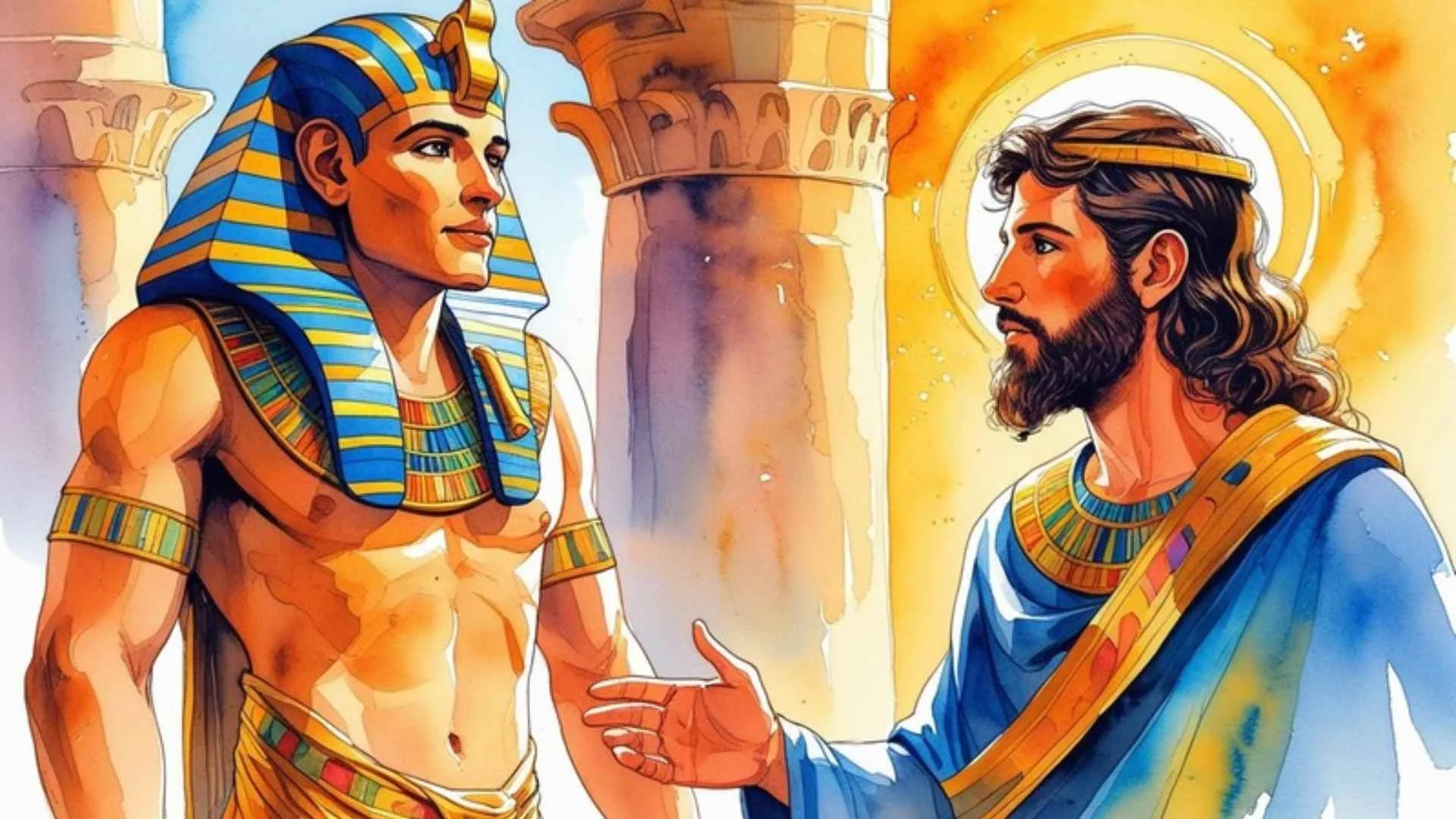
Joseph Had God-Confidence
When following the story, the reader can find a clue as to the relational component at play. Joseph may not have known the answer immediately, as if he were omniscient (knowing everything, like God) or had command over when and how God operated in his life, but he had confidence. It seems Joseph, knowing God to be presently active in the affairs of humankind, and compassionate, believed God would set Pharaoh's heart at ease and help Pharaoh and the nation he led prosper if only the king would listen. In other words, Joseph didn’t place his confidence in his own gifting or abilities, but trusted in God’s good nature and purpose in giving Pharaoh the dream in the first place.
Joseph leaned on his family’s covenant history and God’s promises to them,
along with his general/experiential knowledge of His character,
and he trusted God to reveal again what was previously hidden.
God responded by empowering Joseph with wisdom and revelation.
Joseph Had Great Faith
If I had to pick, I’m not sure whether to say Joseph had more grace for revelation or faith. I’m sure it’s both to some degree, but it seems his faith played the biggest role in his life. The way the narrative continues, it seems Joseph speaks clearly and confidently about his interpretation after Pharaoh relates the dreams. There’s no mention of taking time to pray about it, as if they reconvened after another day or other shorter period of time. Not only that, but Joseph then leads into what Pharaoh should do about it, describing a thorough plan complete with percentages to tax in the years of abundance and people that would be required to supervise the storing of the abundant supply before the lean years arrived.
We can easily see this as the Spirit of God coming upon Joseph, enabling him to speak with wisdom and certainty boldly. Still, there are other Old Testament Pneumatologies (understandings of the working of God’s Spirit) that may explain it differently. We may first consider these workings before finalizing our decision.
Two Ways to Understand God’s Spirit in Action
M. Turner in a section “Spiritual gifts in the OT” [6] suggests there are multiple ways of understanding the Spirit’s action, but two main types of “tension”:
An ability is given to a person for a purpose, but the person determines how they use it;
“The Spirit is immanent [existing in or as part of the essence of] all creation/life,” and, “all authentic wisdom/understanding, creative work, art and culture, can be understood as manifestations of the Spirit of life that glorify God.” [7]
The second, Turner explains, doesn’t designate between nature and supernature, our natural abilities as opposed to God’s supernatural gifts added to us; whereas, the first presents God as the “charismatic Spirit… the Spirit [who] typically ‘falls upon’ or ‘seizes’ a person; ‘fills’ him or her, and enables immediate revelation, charismatic wisdom, inspired speech or acts of power, such as can be attributed only to God’s direct work, not ordinary human potential.” [8]
This charismatic Spirit is who I’d argue most bible readers experience in their devotional reading/study of scripture. The whole Old and New Testament scripture doesn’t reveal God to be the distant architect as much as the present God and Father.
Finally, Turner points to “Targumic and Rabbinic tradition,” traditional Jewish interpretations, taking Exod. 31.3-4 to be the Spirit of prophecy upon Bezalel, enabling the building of the tent of meeting, the ark of the testimony, the mercy seat, utensils, etc., for example. In my reading of the Joseph account, I see: The Spirit that operated in Joseph made him stand out much like Paul and Barnabas would later, when confused for the Greek gods Zeus and Hermes.[9] As Joseph understood, this was God at work using Joseph to communicate with Pharaoh and rescue nations, including the Hebrew people, from a famine that otherwise would have squeezed the life out of the entire region.
What if being filled with the Spirit regularly led to such misunderstandings from those around us, as Paul and Barnabas experienced? Shouldn’t people be able to recognize the difference in us?
What do you think?
Threads of Truth from Old to New Testament:
Acts 1.8 where Peter is quoting Joel 2.28-32 reminds us that God is present and active, enabling us to prophesy, experience dreams and visions, see signs and wonders, and ultimately experience deliverance and salvation.
The promise is for whomever will call on Him (v. 32), fulfilled in Christ, not only for salvation but also to empower the disciple for witness in demonstrating the will of God, revealing His nature.
Ezekiel 37.27; Acts 7.48-9 ref. Isaiah 66.1-2; Luke 17.20-1; 2 Corinthians 4.7,13-14, 18; 1 Corinthians 6.19; 1 Peter 2.5.
This thread illustrates how God always intended to dwell both with us and inside us, as a vast people (living stones being built up) and as individuals (you are the temple of the Holy Spirit) who have the Kingdom within them. He has never desired distance, as if he can’t tolerate us. Just the opposite!
Living Out Theology
Joseph held onto what was revealed to him, much like Paul instructed Timothy to do (1 Timothy 1:18-20). The charge and advice given to keep it were to remember the prophecies (what God had revealed) “that by them you may wage the good warfare, holding faith and a good conscience.” Paul then commented that some had shipwrecked their faith because of their rejection of the prophetic revelation from God. They didn’t do anything with the word revealed to them; in fact, they rejected it, mocked it, or gave up on it, damaging their faith, etc. Joseph thrived in his 13 years of servitude and imprisonment by never forgetting God or His promises revealed to Joseph! He increased in favor, wisdom, and wealth, emerging from prison a nobleman ranked higher than anyone else in the nation, except one (Pharaoh).
Follow almost any bible character and you will likely find a similar life pattern of:
Promise
Testing
The obedient/faithful empowerment/blessing in carrying out God’s will
What do we do with this?
Remember the sermon on the mount and passages like James 1.5: ask, seek, and knock, knowing that God is generous and faithful to give.
Engage with God, primarily knowing Him as Father, as Jesus taught.
Determine to obey His revealed will in the scriptures and seek to discern His everyday workings in your life through prayer and a steadfast commitment to live an upright life as His child, ambassador, and message to the world.
Consider This: You can be confident God has been working in you. If you’ve confessed Jesus as Lord, you’re likely on the journey of leaving your own way to follow Jesus and His way. He’s made His dwelling place in you! That means you’re already filled and growing in your understanding of what that means. (Col. 1.19; Eph. 3.19) In general that means you are called to holiness and truth, to rejoicing and thanksgiving, and to be continually surrendered to Jesus. Keeping that ethos, the standard by which you live your life and what you allow to motivate you, will keep you full of the courage you need to face the challenges that come your way.
You’ll likely need brothers and sisters in the faith to help spur you on. Don’t give up on this community or misunderstand the grace of God. There are no hoops to jump through in order to get what I’ve described- Jesus did the heavy lifting; instead, our primary concern is to watch over our hearts and lives diligently, living in the fear of the Lord and ensuring our allegiance and the fruit of our lives is true to His glory. Your pedigree or efforts never qualified you; instead, you were redeemed by the precious blood of the Lamb, and you belong to Him, and He to you! Rest knowing the God of all grace is for you, beside you, aiding you, and empowering you to do His will.
For all of us, the process of being grounded in faith, being tested and refined is unavoidable, but we come through pure if we keep our eyes on Jesus and don’t give up. One could call this the process of sanctification, or you can simply know this is what growing up in God’s kingdom looks like. God is faithful to deliver us from everything that isn’t Him until we learn to trust and rest in His presence. Joseph chose not to give up when hardship came his way, and God used every situation to make a way for His ultimate purposes to come to be. May you be continually filled with the knowledge of God’s will and enabled to bear witness to His goodness so the world will know they’re loved and that He’s worthy. May you continually be filled with God’s Spirit as you acknowledge Him and drink. [10]
Being Filled Brings About Redemptive Purpose
In studying Genesis 41:38 we see that being filled with the Spirit means that in maintaining our loyalty and confidence in God, we get to experience God redeeming the time and hardships of our life for His glory. If we don’t give up, God can and will use every wrong, every mistreatment and undeserved hardship for His redemptive purposes. If you’ve messed up and you’re experiencing the fruit of your mistakes, God will redemptively use that for your good, too.

Charles Sandusky has been serving in Christian ministry since 2010 and was ordained in 2015. He earned his M.Div. from Regent University in 2016 and has ministered in various church settings with a heart to see the Church mature as described in Ephesians 4–6. Now based in Fernandina Beach, FL, he and his family have been a foster family since 2018.
Footnotes:
1 LaSor, William; et al. Old Testament Survey: The Message, Form, and Background of the Old Testament. Second Edition. (Grand Rapids, MI: William B. Eerdman’s Publishing Company, 1996), 10,48. *The “documentary theory” would say this important transitional story in patriarchal history likely has a Yahwist source that emphasizes God’s (monotheist/singular) nearness and presence in Creation and through the establishment of Israel’s monarchy.
2 “Egyptian Pantheon of Gods.” historyegypt.org. Accessed June 6, 2025. https://historyegypt.org/ideology/egyptian-pantheon-of-gods.
3 “Septuagint”. Britannica.com. Last Updated April 25, 2025. https://www.britannica.com/topic/Septuagint.
4 Hanse and Gerhard Kittel. Theological Dictionary of the New Testament. vol 2, (Grand Rapids, MI: Eerdmans Publishing Company, 1964), 817.
5 Gen 41:16
6 M. Turner, “Spiritual Gifts: Spiritual Gifts in the OT,” in New Dictionary of Biblical Theology, ed. T. Desmond Alexander and Brian S. Rosner. (Downers Grove, Illinois: InterVarsity Press, 2000), 790-1.
7 Ibid.
8 Ibid., 791.
9 Acts 14
10 Wayne Grudem, “What Is ‘Being Filled With the Spirit?’” in Systematic Theology: An Introduction to Biblical Doctrine (Grand Rapids, Michigan: Zondervan, 1994), 781.
